Solution: Product Environmental Intelligence
Know the impact of every product. Turn it into commercial advantage.
Create accurate, audit-ready product environmental footprints at scale. CarbonQuota transforms operational and supply chain data into trusted intelligence that helps you reduce risk, respond faster and win more business.
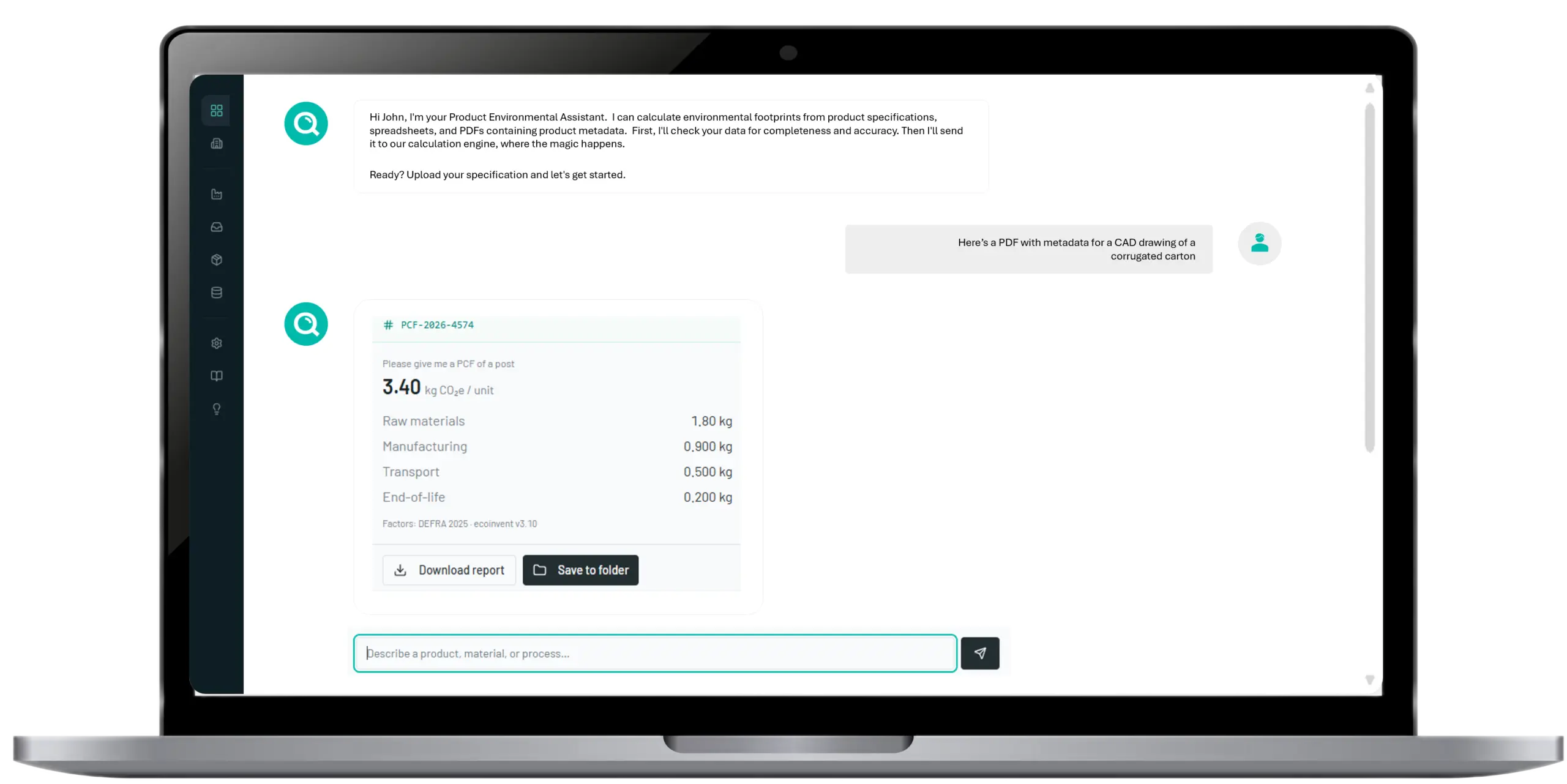
Product environmental data should support better decisions – not create more work.
But information is often scattered across suppliers, ERP systems, sites and spreadsheets. Teams spend days collecting and checking data, yet still struggle to answer customer requests or defend the results.
Without reliable product-level intelligence, it is harder to compare options, identify hotspots, substantiate claims and meet growing disclosure requirements.
Why it matters
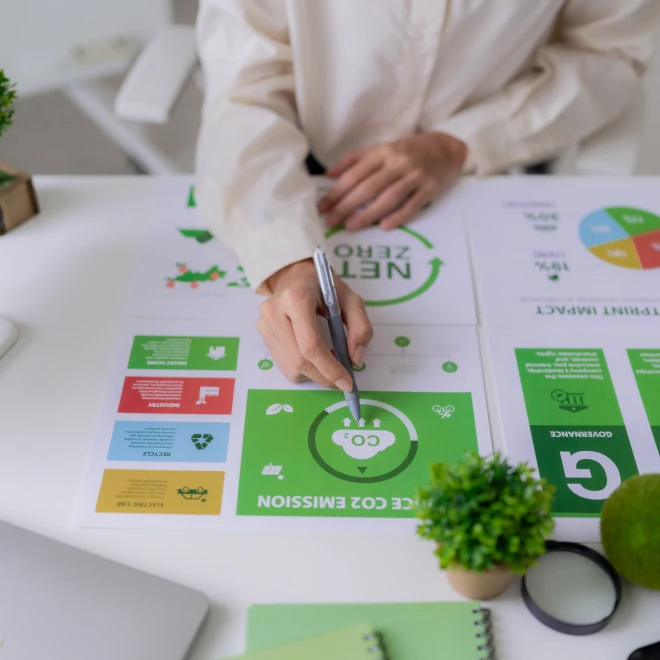
Environmental performance is rapidly becoming a business performance indicator.
Commercially, organisations need trusted product data to win business, respond to customer requests and differentiate themselves in increasingly competitive markets. Buyers are requesting greater transparency and using environmental performance to inform supplier selection.
Operationally, understanding where product impacts occur helps teams identify improvement opportunities, optimise materials, reduce waste and focus investment where it will have the greatest effect.
From a regulatory perspective, businesses face growing expectations around carbon disclosure, environmental claims and product transparency. Accurate, auditable product data provides the foundation for compliance while reducing the risk of inaccurate reporting or greenwashing concerns.
Organisations that develop strong environmental intelligence are better positioned to make informed decisions, respond quickly to change and build long-term resilience.
How CarbonQuota helps
From complex data to confident decisions.
Connect your data
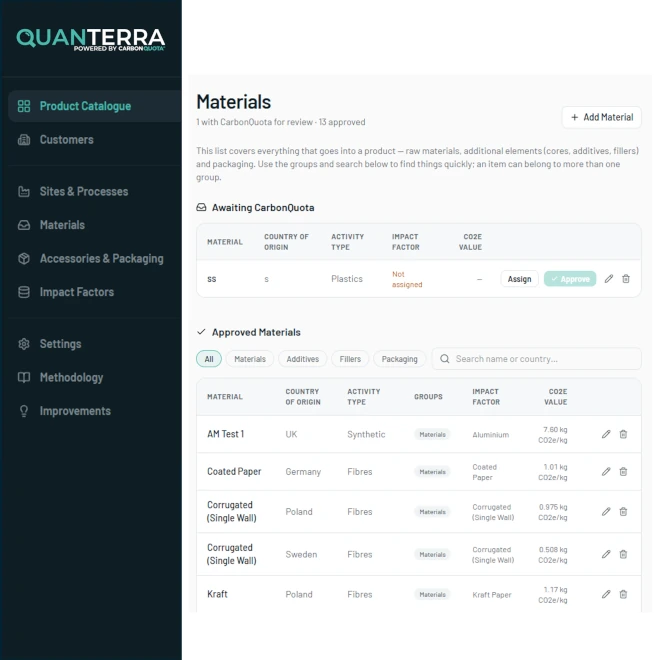
Bring together product, material, supplier, manufacturing and logistics data from existing systems and workflows.
Calculate with confidence
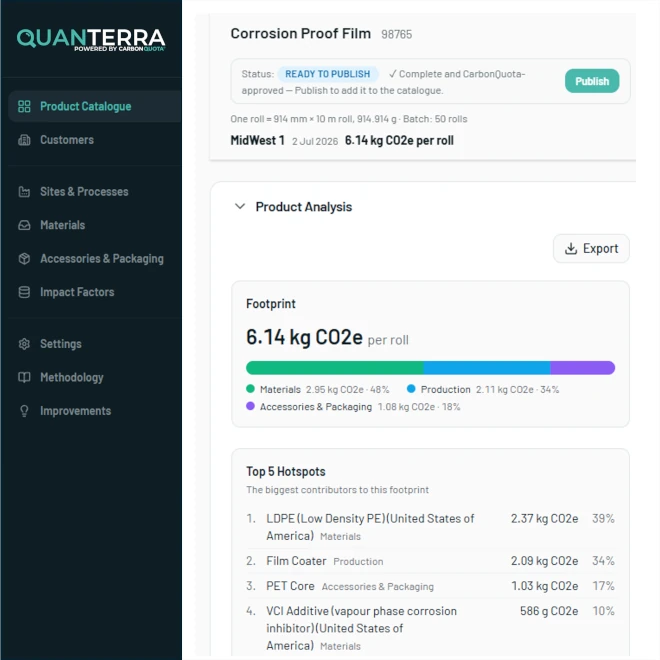
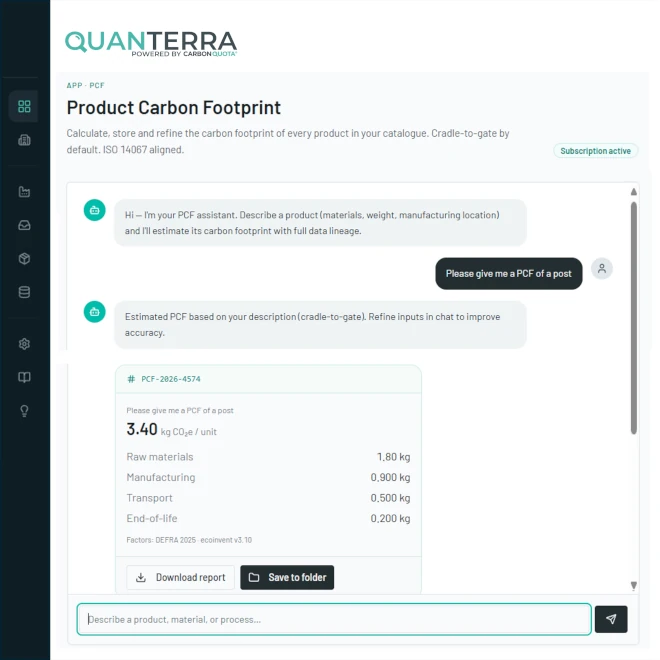
Generate consistent, traceable footprints using activity-based calculations, recognised methodologies and CarbonQuota’s specialist environmental database.
Act on the insight
Identify hotspots, compare alternatives and share credible product information with customers, procurement teams and stakeholders.
What you can do
Calculate at scale
Create and manage consistent footprints across products, sites and portfolios.
Improve data quality
Structure supplier and operational inputs, identify gaps and maintain a clear audit trail.
Find opportunities
See which materials, processes, suppliers and transport activities drive impact.
Compare alternatives
Model changes to materials, specifications, sourcing and production before committing.
Share trusted evidence
Respond faster to customer, tender and procurement requests with credible product-level data.
Track progress
Measure improvements over time and build a stronger foundation for reporting and disclosure.
Business Outcomes
Move faster
Replace repetitive collection and calculation with scalable, repeatable workflows.
Make better decisions
Use product-level insight to prioritise material, design, sourcing and operational improvements.
Build customer confidence
Provide consistent, auditable evidence that supports sales conversations and responsible claims.
Reduce commercial risk
Prepare for changing customer expectations, procurement requirements and regulatory scrutiny.
Turn trusted environmental intelligence into commercial advantage.
Customer Story
Trusted product data that supports sales growth
Berger Textiles and Eikon, part of Spandex, needed credible environmental data for a wide portfolio of fabrics used in print, signage, events and display.
CarbonQuota mapped the product supply chain and created independently validated product carbon footprints using recognised standards and a transparent methodology. The business can now give customers consistent data to compare products, strengthen environmental claims and make more informed purchasing decisions.

FAQs
What is a product carbon footprint (PCF), and why is it important?
Products require energy-intensive manufacturing processes, which traditionally rely on burning fossil fuels such as oil, gas and coal. This releases greenhouse gases into the atmosphere which trap more heat than normal in the atmosphere. This accelerates global climate change – so understanding and reducing a product carbon footprint means you can do something about climate change.
What boundaries can you cover (cradle-to-gate, cradle-to-grave, etc.)?
CarbonQuota defines boundaries based on your use case and data availability. They’ll agree this upfront and document it clearly in the methodology statement.
How long does a Product Carbon Footprint project take?
Timelines depend on scope and data readiness. Rapid assessments are designed to move quickly; scaled and integrated approaches follow an agreed implementation plan.
What is a Product Carbon Footprint (PCF)?
A PCF measures the greenhouse gas emissions associated with a product across defined lifecycle stages based on an agreed scope and boundary.
Can you calculate Product Environmental Footprint across a whole product portfolio?
Yes, CarbonQuota can help build a repeatable approach for multiple SKUs and ongoing reporting, not just one-off studies.
What is the EU’s Product Environmental Footprint methodology?
The EU’s Product Environmental Footprint methodology has been developed, tested, and refined over the past decade, with sector-specific rules (PEFCRs) now being finalised for product categories including apparel and footwear.
Can you calculate Product Carbon Footprint across a whole product portfolio?
Yes, we can help you build a repeatable approach for multiple SKUs and ongoing reporting, not just one-off studies.
How does CarbonQuota calculate the carbon footprint for a material?
CarbonQuota calculates the carbon footprint of a material by drawing on a combination of primary data from the supplier, industry-recognised emission factor databases, and lifecycle assessment (LCA) methodology. Where supplier-specific data is available, we use it to maximise accuracy. Even better if we can get data from the supplier’s supply chain. Where it isn’t, we apply robust secondary data sources using our models and expertise. Each material footprint is expressed in CO2e per unit (e.g. kg CO2e per kg of material) and accounts for the emissions generated through extraction, processing, and transportation to the point of use
Still have more questions?
Contact usTurn product data into trusted environmental intelligence
See how CarbonQuota can help you calculate at scale, respond faster and make better product decisions.
