Solution: Corporate Environmental Intelligence
Measure your operational impact. Turn insight into action.
Transform operational and supply chain data into trusted corporate environmental intelligence. Measure Scope 1, 2 and 3 emissions, energy and water, identify reduction opportunities and build a credible path to Net Zero.
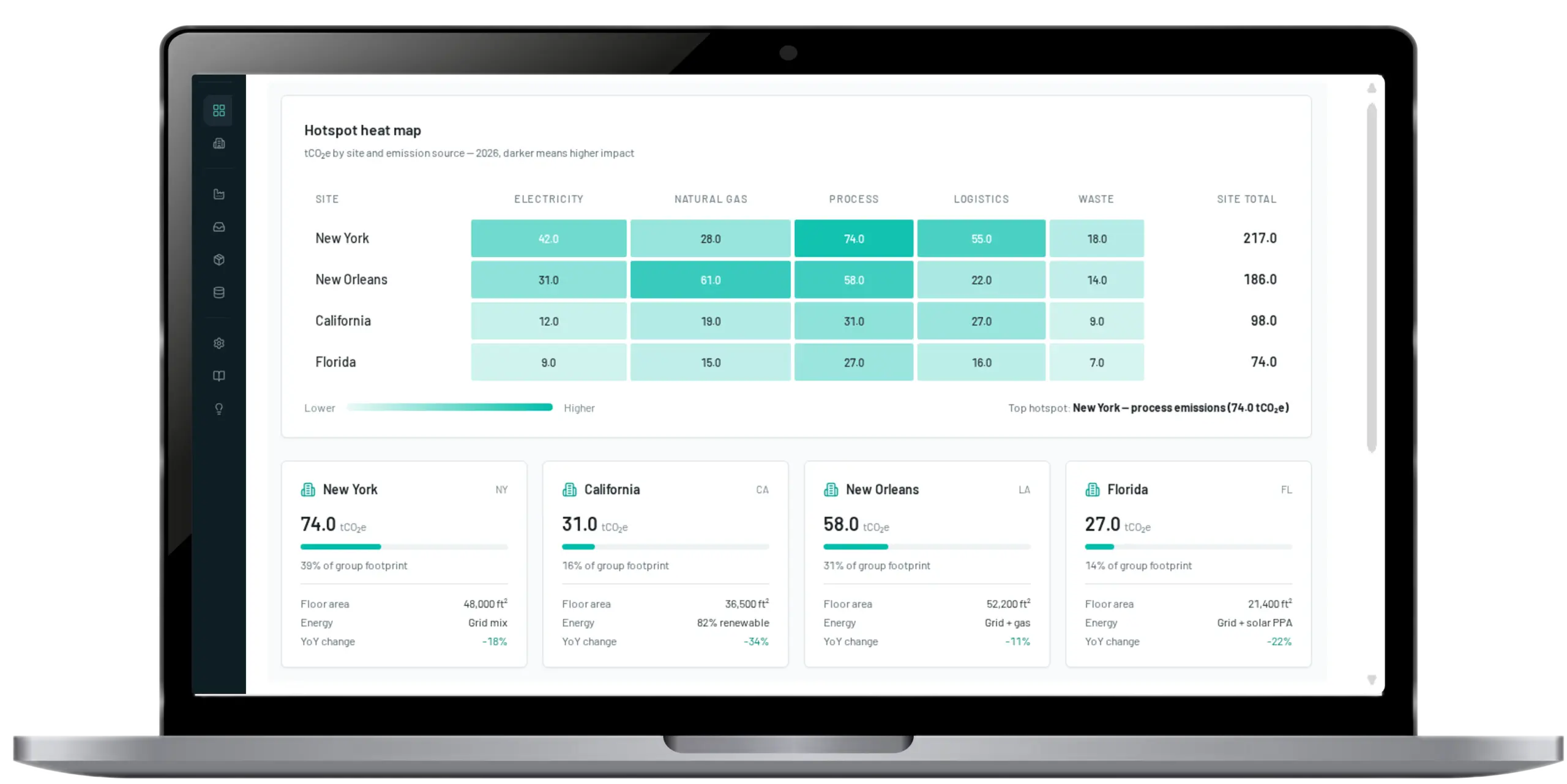
Environmental reporting should guide action – not consume your team’s time.
But emissions, energy, water and supplier data often sit across disconnected systems, departments and sites. Teams spend weeks collecting and checking information, yet still lack confidence in the results.
Without one trusted view, it is difficult to meet reporting demands, identify hotspots, prioritise investment or demonstrate credible progress to customers, investors and regulators.

How CarbonQuota helps
From fragmented data to measurable progress.
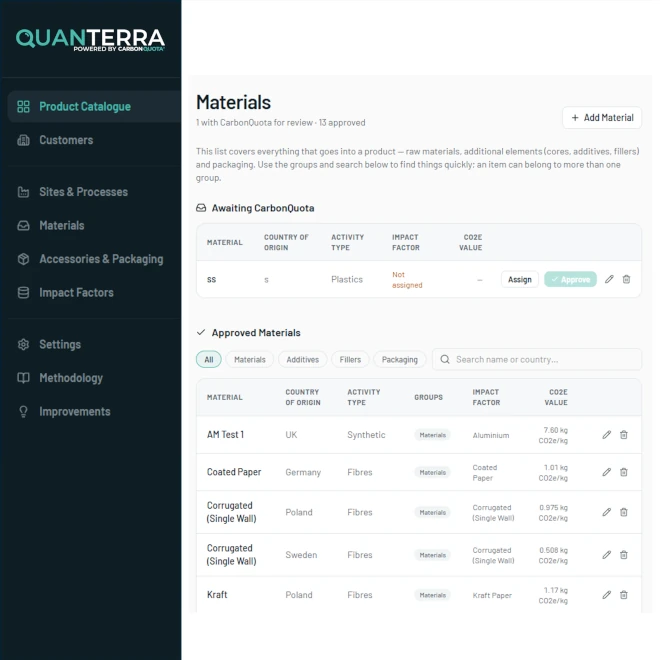
Bring your data together
Collect operational, facility, supplier and business activity data through structured workflows and integrations.
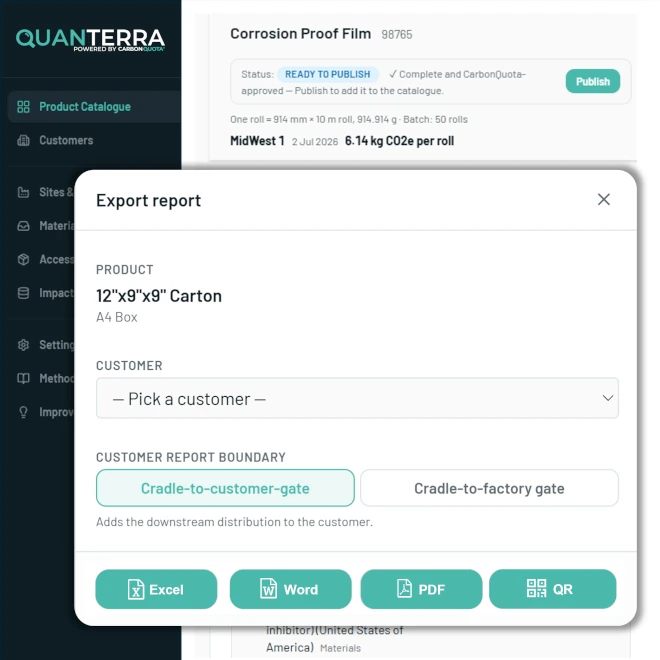
Measure with confidence
Calculate Scope 1, 2 and 3 emissions alongside energy and water using transparent, activity-based methods and recognised standards.
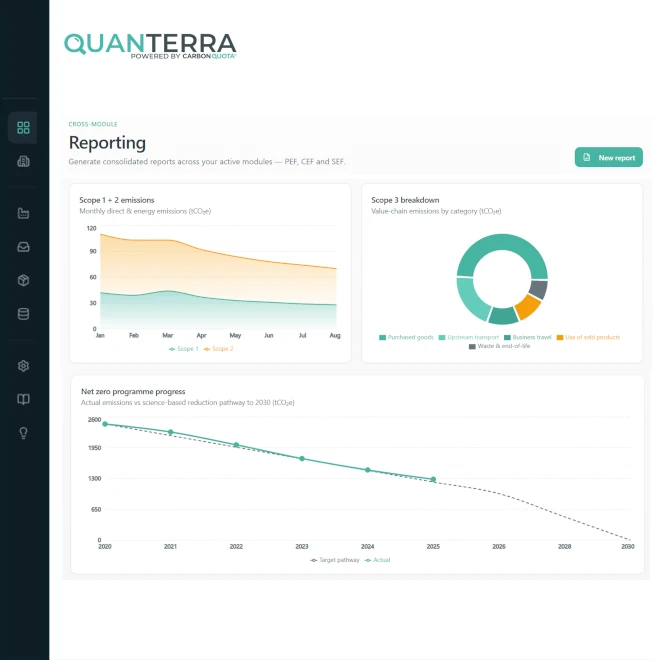
Reduce and report
Identify hotspots, model reduction opportunities, track progress and produce credible information for disclosures, customers and decision-makers.
“CarbonQuota has given us the platform to understand what data we need, what the findings show and what objectives we can implement to reduce our emissions over time.”
Ian Stevenson, Operations Director at bakergoodchild

What you can do
Measure your full footprint
Create consistent Scope 1, 2 and 3 inventories across entities, sites and business units.
Improve data quality
Replace disconnected spreadsheets with structured collection, validation and a clear audit trail.
Understand resource use
Track carbon, energy and water performance using absolute and intensity metrics.
Engage your supply chain
Collect supplier data more efficiently and improve visibility of value chain emissions.
Prioritise reductions
Identify hotspots, compare scenarios and focus investment where it can deliver the greatest impact.
Report with confidence
Support GHG Protocol, CDP, EcoVadis, SBTi and SECR requirements with transparent, defensible data.
Business Outcomes
Save time
Streamline data collection, calculation and reporting across teams, suppliers and sites.
Make better decisions
Use trusted insight to prioritise operational improvements and decarbonisation investment.
Demonstrate progress
Give customers, investors and leadership credible evidence of environmental performance.
Reduce risk
Prepare for evolving disclosure requirements and stakeholder scrutiny with auditable data.
Turn trusted environmental intelligence into commercial advantage.
Customer Story
Turning complex operational data into scalable reporting
GES delivers more than 300 events each year and needed a faster way to provide accurate, event-specific carbon reporting. Gathering data for one report could take around 20 hours.
CarbonQuota connected GES’s operational systems with trusted environmental data and automated calculations. GES can now deliver detailed client reports approximately two weeks after each event, with less manual processing, more consistent results and clearer insight to support reduction planning.

FAQs
What does CarbonQuota “Carbon Measured” mean?
Carbon Measured is a status where a company is actively studying an aspect of its own operations, supply chain or products to get a baseline of its carbon footprint. CarbonQuota expects organisations to be publicly committed to make reductions.
What does CarbonQuota “Carbon Reduced” mean?
Carbon Reduced is where a company can show sustained reductions in its carbon footprint over time – either its own operations, its supply chain or its products. This may be in absolute terms, or based on a reduction in carbon intensity.
What is a Corporate Environmental Footprint?
Calculating a Corporate Environmental Footprint follows a similar approach to a carbon footprint but incorporates a wider set of environmental indicators. Data is collected across operations and supply chains and assessed against recognised methodologies and impact categories — such as water stress, resource depletion, and ecosystem impact. CarbonQuota works with organisations to define the scope and boundaries of their environmental footprint assessment, ensuring it reflects their most material impacts.
What is a corporate carbon footprint and why is it important?
A Corporate Carbon Footprint quantifies the total greenhouse gas emissions associated with an organisation’s activities. It’s important because it gives businesses the data they need to take meaningful climate action, such as identifying the largest sources of emissions, setting reduction targets, and demonstrating progress to customers, investors, and regulators. As legislation and customer expectations tighten, understanding your carbon footprint is increasingly essential to remaining competitive and compliant.
What is the difference between Scope 1, 2 and 3 emissions?
Scope 1 and 2 refer to carbon emissions that an organisation directly controls. Scope 1 is on-site combustion of gas and oil, fuel for company vehicles, industrial usage of greenhouse gases such as CO2, and leakage from units such as refrigeration. Scope 2 refers to the purchase of electricity, steam, heating or cooling that was generated by a third party. Scope 3 emissoins is all other greenhouse gas emissions associated with the activity of an organisation, most notably in their upstream and downstream supply chain. Scope 3 also includes other activities such as business travel, commuting, capital goods, leases, franchises and investments – along with the processing, use and end-of-life of products sold to another organisation or to the end consumer.
What is a Corporate Carbon Footprint?
A Corporate Carbon Footprint (CCF) is a measure of the total greenhouse gas (GHG) emissions produced by an organisation’s everyday activities. Expressed in CO2e (carbon dioxide equivalent), it covers emissions across Scope 1 (fuels used in buildings and vehicles), Scope 2 (electricity from the grid), and Scope 3 (emissions from your value chain). It gives businesses a clear baseline to understand their climate impact and identify where reductions can be mad
How do you calculate a Corporate Environmental Footprint?
Calculating a Corporate Environmental Footprint follows a similar approach to a carbon footprint but incorporates a wider set of environmental indicators. Data is collected across operations and supply chains and assessed against recognised methodologies and impact categories — such as water stress, resource depletion, and ecosystem impact. CarbonQuota works with organisations to define the scope and boundaries of their environmental footprint assessment, ensuring it reflects their most material impacts.
Can we calculate footprints across multiple sites?
Yes, CarbonQuota’s technology and team can help build a repeatable approach for multiple sitesand ongoing reporting.
Still have more questions?
Contact usTurn environmental data into measurable business action
See how CarbonQuota can help you measure with confidence, reduce impact and accelerate progress towards Net Zero.
