CUSTOMER STORIES
Turning carbon data into action for Nuneaton Signs
The Challenge
Like many growing print and manufacturing businesses, Nuneaton Signs had begun tracking elements of its Scope 1 and 2 emissions (the carbon footprint of energy used in its factory), but partial visibility wasn’t enough.
To meet rising customer expectations, strengthen sustainability reporting and identify genuine reduction opportunities, they needed:
- A complete Scope 1, 2 and 3 carbon footprint
- A robust, defensible baseline
- Expert guidance through data collection and methodology
- Internal engagement and training to build long-term capability
Without a structured approach, carbon reporting risked becoming fragmented, time-consuming and difficult to trust. So they engaged CarbonQuota to help!
CarbonQuota’s strong track record with similar organisations made them the right partner. Their team provided the guidance we needed from the outset – Karim’s expert advice during data collection and staff training were especially valuable. Their knowledge and support have been key in strengthening our sustainability reporting.
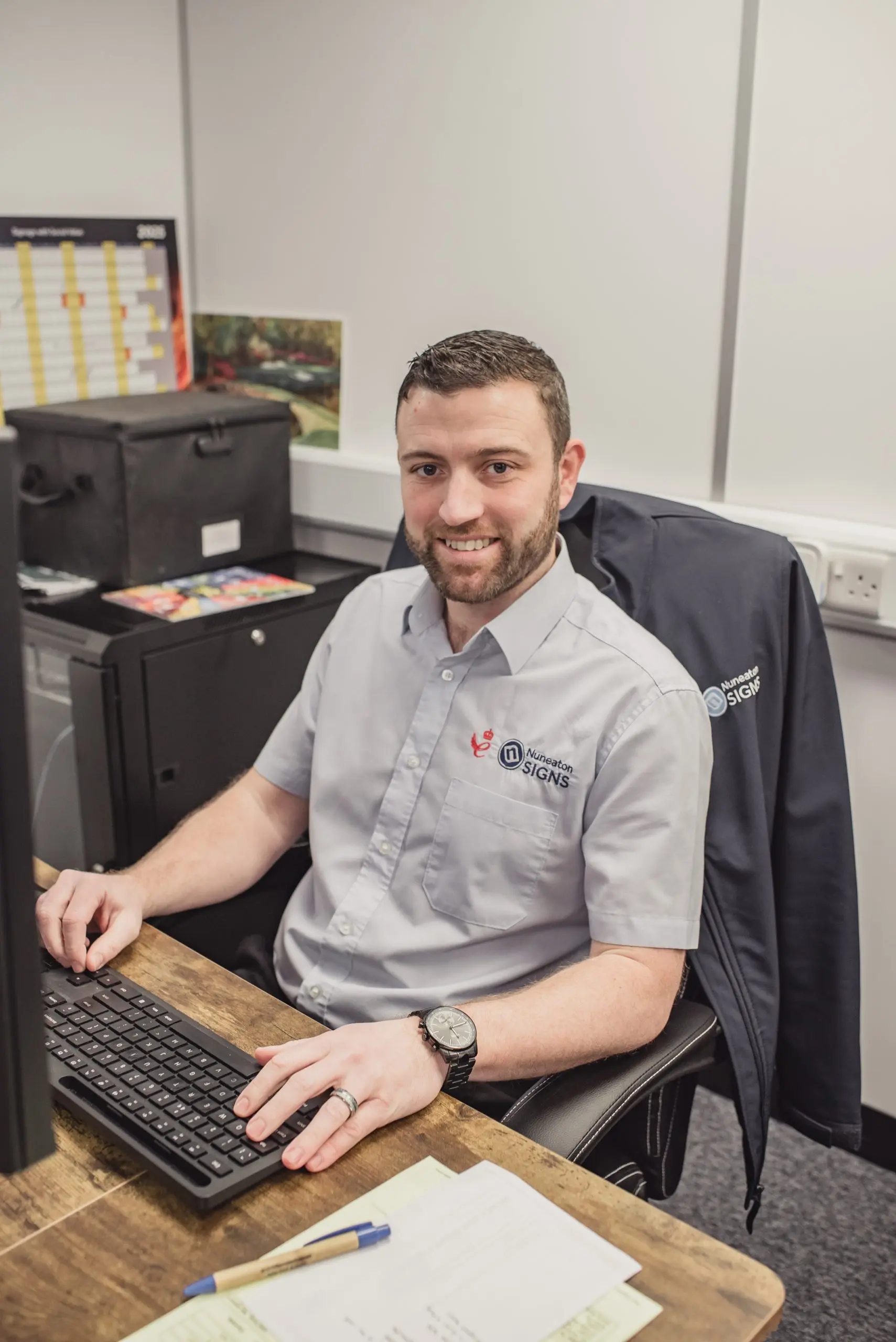
Turning carbon data into action
CarbonQuota’s experience working with similar organisations in the print and manufacturing sectors provided immediate confidence.
From day one, the CarbonQuota team provided hands-on support:
- Structured data collection guidance
- Expert advice during footprint calculation
- Staff training to embed knowledge internally
- Clear methodology aligned to recognised standards
This wasn’t just about producing a report, it was about building a foundation for credible, repeatable carbon management.
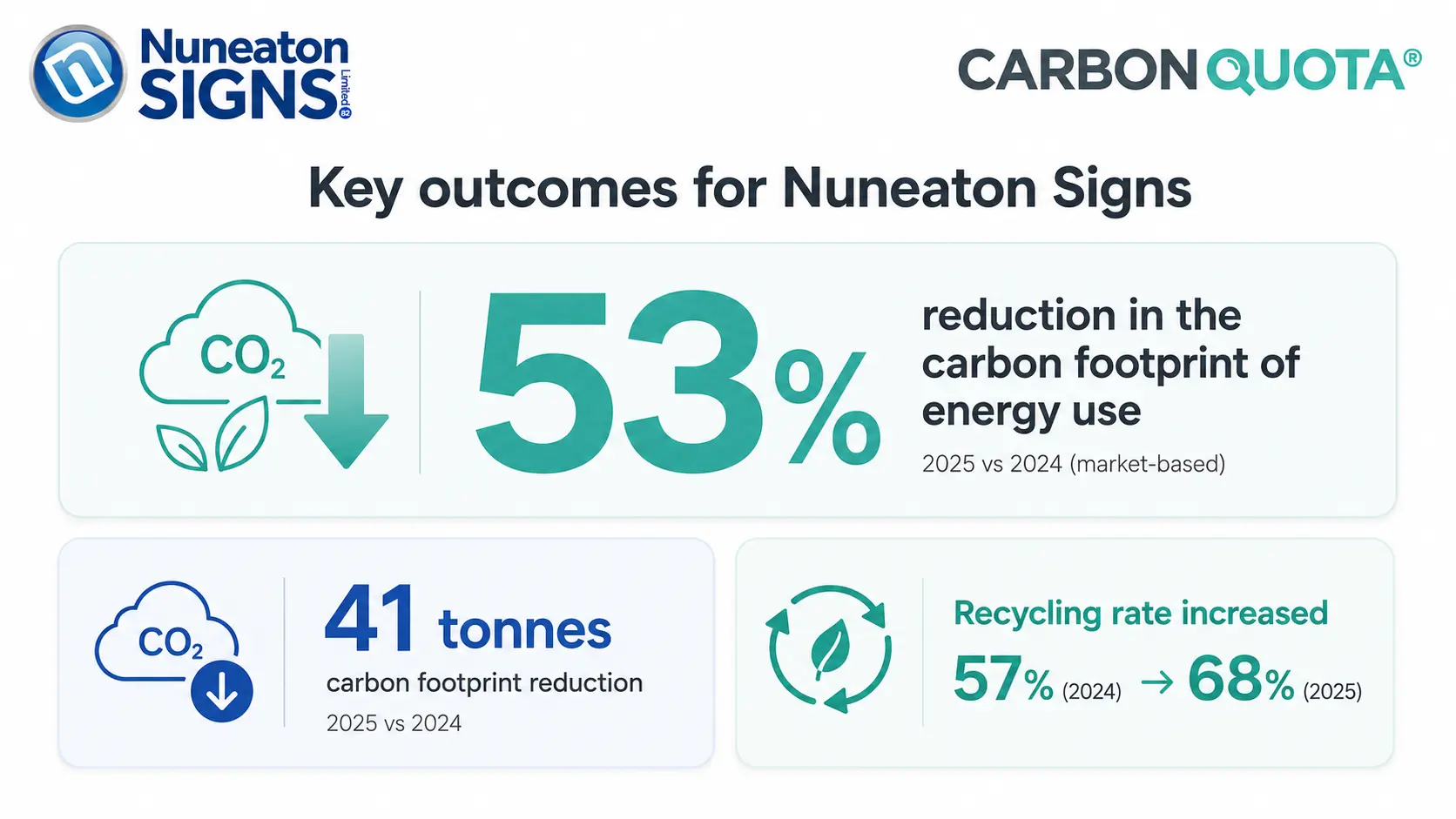
Results
- 53% reduction in the carbon footprint of their energy use in 2025 vs 2024 (market-based)
- A carbon footprint reduction of 41 tonnes in 2025 vs 2024
- Recycling rate increased from 57% (2024) to 68% (2025)
Carbon data didn’t sit in a spreadsheet, it directly informed operational decisions.
With clearer visibility across Scope 3 (in other words the carbon footprint of its supply chain), the business strengthened its circular strategy:
- Introduced a supplier take-back scheme
- Expanded reuse and recycling capabilities
- Increased collaboration with waste contractors
- Worked with material suppliers to broaden environmentally responsible product ranges
Armed with credible emissions data, Nuneaton Signs accelerated its transport decarbonisation. With their company car fleet already transitioned to electric, delivery vehicles are progressively being replaced with EV alternatives.
Contact our team to explore how we can help your business use credible sustainability as your competitive edge.
Contact our team
To find out how CarbonQuota can support your product carbon footprints and carbon data goals.
Recommended reads:
-
 AgenciesEventsPrintTextiles & Clothing
Helping GES turn event data into client-ready carbon insight
GES needed a better way to provide accurate, event-specific carbon reporting for its clients.
Read more -
 PrintPublishing
Making carbon calculations faster, easier and scalable for Acorn Web Offset
The Challenge Acorn Web Offset already understood the…
Read more -
 Print
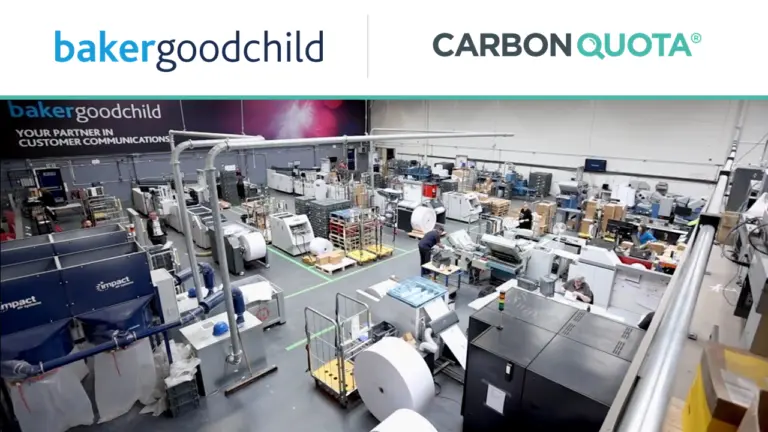
PrintHelping bakergoodchild plan credible carbon reduction
bakergoodchild had been looking closely at sustainability for several years. Like many growing print and communications businesses, the company wanted to understand how it could improve, reduce its environmental impact and respond more confidently to changing customer expectations.
Read more
