
Product Carbon Footprints that win trust
We can help your business to get clear, standards-aligned product carbon footprints, with the methodology and evidence you need to answer customers, procurement teams and auditors confidently.
We can deliver data you can apply with confidence through:
- Science-based accuracy aligned to recognised international standards
- Granular breakdowns across raw materials, production processes and logistics
- Built to scale from one-off assessments to automated, integrated product carbon footprints
- Reporting-ready outputs you can share internally and externally



Why product carbon footprints now?
Because your customers are asking for it and expectations are rising
Carbon is now part of the buying conversation. Customers want visibility into the footprint of the goods and services they purchase, and those requirements increasingly cascade down supply chains.
Customer and procurement pressure
Requests are shifting from broad sustainability claims to credible, product-specific data that can be evidenced.
More granular reporting expectations
Regulatory headwinds and disclosure frameworks are pushing organisations towards more detailed, defensible emissions reporting.
Risk, reputation and competitiveness
Reliable product data helps you reduce risk, build trust and strengthen your commercial position.
A Product Carbon Footprint service built around your reality
Whether you need a one-off product study or repeatable product-level reporting at scale, we’ll tailor the right approach – grounded in science, not guesswork. Rapid product carbon assessment.
A focused assessment for a priority product (or product type), designed to get you to credible, shareable results quickly.
Scope and boundary definition (e.g. cradle-to-gate where appropriate)
Data collection support and validation of key components/materials
Calculations delivered to stringent standards
Results and methodology statement in an Excel or PowerPoint format
How we help
Create a repeatable way to generate and maintain Product Carbon Footprints across product ranges without reinventing the process each time.
From detailed lifecycle assessments (LCAs) covering all environmental impacts to rapid studies focussing on carbon footprint, we:
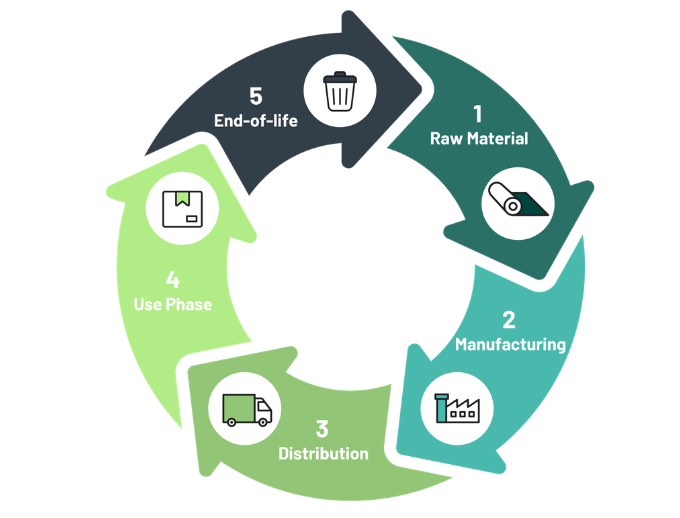
- We work with you and your sub-suppliers to cover the full lifecycle
- A structured data model for product specifications, quantities and sources
- Consistent assumptions and documented methodology
- Outputs built for customer queries and internal and external reporting
Instant Product Carbon Footprints via seamless integration
Connect your systems to CarbonQuota to return product/job footprints automatically so carbon becomes a real-time commercial input, not a post-production scramble.
Includes:
- Integration via API to your MIS/ERP, or via data upload
- Carbon footprints returned into your workflow (e.g., quote/estimate)
- Dashboard for tracking, downloads, and reporting outputs






Client Story: How CarbonQuota is helping Dufaylite turn sustainability into a competitive advantage
Dufaylite, a leader in paper honeycomb solutions, commissioned CarbonQuota to undertake a full cradle-to-grave study of its paper honeycomb board liners.
The study confirmed that, for food delivery packaging applications, the liners deliver between 35-60% lower carbon footprint compared to lamb’s wool insulation, and 50-70% lower compared to expanded polystyrene (EPS).
By embedding credible carbon footprint measurement and verification into its product offer, Dufaylite is raising the bar for sustainable packaging performance. And CarbonQuota is enabling that transformation
It is a testament to our team at Dufaylite that an independent third party has verified our efforts and shown that our paper honeycomb board liners have a lower carbon footprint than other alternatives on the market. This is only the beginning, with further improvements and wider assessments already planned.

Talk to our team about the fastest route to credible PCFs and the best way to scale them across your products and workflows.
FAQs
*Blank* Do not edit
What is a Product Carbon Footprint (PCF)?
A PCF measures the greenhouse gas emissions associated with a product across defined lifecycle stages based on an agreed scope and boundary.
What standards do CarbonQuota align to?
CarbonQuota follows the general principles of the GHG Protocol Product Life Cycle Accounting and Reporting Standard, with guidance from ISO 14040/14044 and PAS 2050.
What boundaries can you cover (cradle-to-gate, cradle-to-grave, etc.)?
We define boundaries based on your use case and data availability. We’ll agree this upfront and document it clearly in the methodology statement.
How long does a Product Carbon Footprint project take?
Timelines depend on scope and data readiness. Rapid assessments are designed to move quickly; scaled and integrated approaches follow an agreed implementation plan
What can we share with customers?
You’ll receive results and a methodology statement that explains boundaries, assumptions, and how the footprint was calculated so you can respond confidently to customer queries.
You’ll receive results and a methodology statement that explains boundaries, assumptions, and how the footprint was calculated so you can respond confidently to customer queries.
Join 450+ brands
Products & Services
Carbon Calculators
Consulting
Legislation
Integration Partners
General Information
Terms & Conditions
Privacy Policy
Cookie Policy
Contact Info
Plexal, The Press Centre
Here East
14 East Bay Lane
London E20 3BS
Email info@carbonquota.co.uk

Copyright © CarbonQuota 2026
FAQs
*Blank* Do not edit
What is CO2e?
CO2e is the standard measure for carbon footprints. It includes carbon dioxide as well as the other most important greenhouse gases created by human activities that contribute to climate change. These are converted to a much simpler to understand ‘carbon dioxide equivalent’, or CO2e. This makes it possible to track emissions across different activities and industries in a standardised way. It enables consistent comparison between industries, specifications, countries, and time periods while simplifying complex environmental impact assessments into an understandable metric.
What is a product carbon footprint, and why is it important?
Products require energy-intensive manufacturing processes, which traditionally rely on burning fossil fuels such as oil, gas and coal. This releases greenhouse gases into the atmosphere which trap more heat than normal in the atmosphere. This accelerates global climate change – so understanding and reducing a product carbon footprint means you can do something about climate change.
What is the difference between Scope 1, 2 and 3 emissions?
Scope 1 and 2 refer to carbon emissions that an organisation directly controls. Scope 1 is on-site combustion of gas and oil, fuel for company vehicles, industrial usage of greenhouse gases such as CO2, and leakage from units such as refrigeration. Scope 2 refers to the purchase of electricity, steam, heating or cooling that was generated by a third party. Scope 3 emissoins is all other greenhouse gas emissions associated with the activity of an organisation, most notably in their upstream and downstream supply chain. Scope 3 also includes other activities such as business travel, commuting, capital goods, leases, franchises and investments – along with the processing, use and end-of-life of products sold to another organisation or to the end consumer.